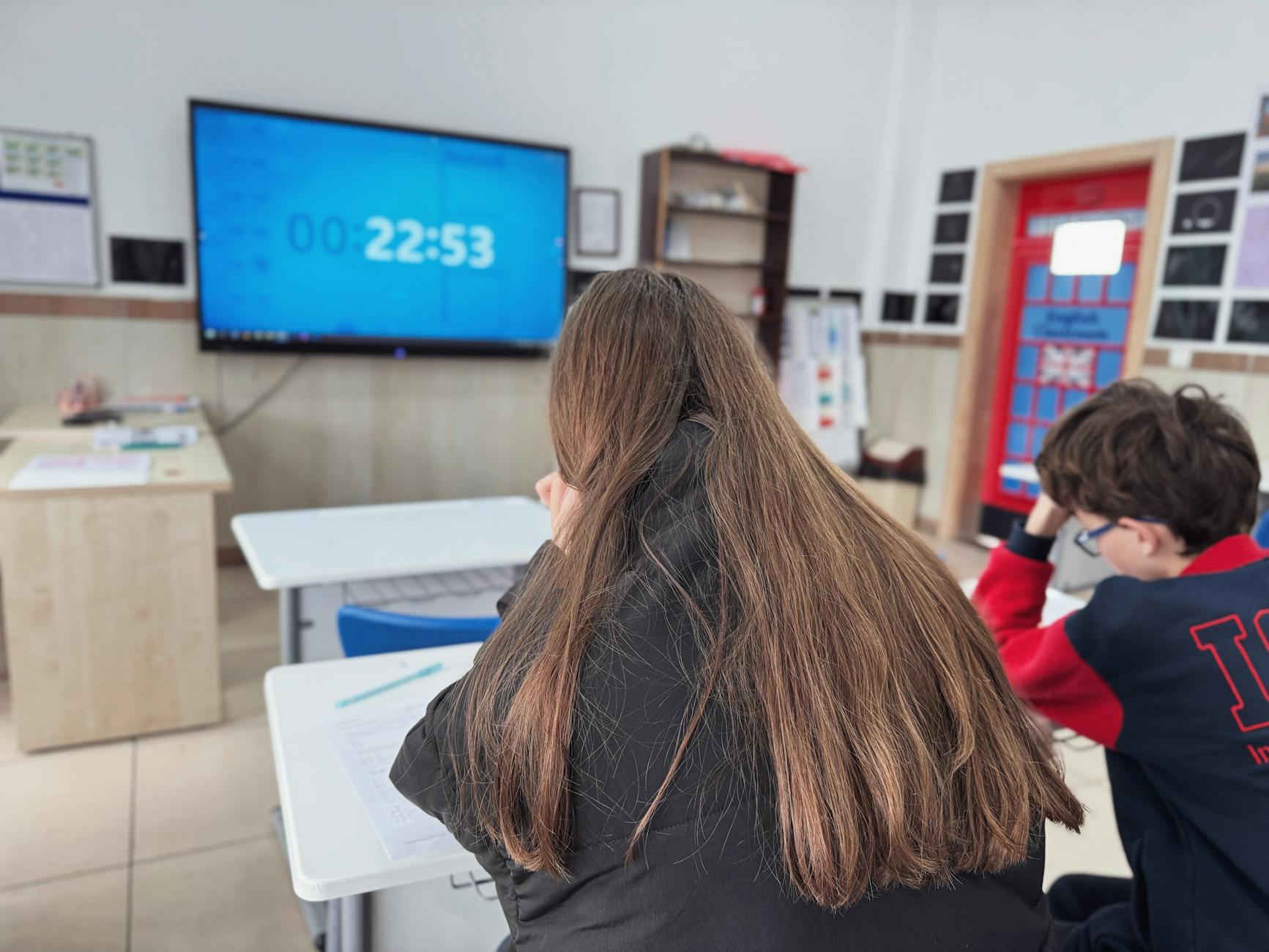
How to Revise for Mock Exams: A Guide for GCSE and A-level Students

Mock exams can feel like a rehearsal that doesn't count. They count more than you might think. Teachers often use mock results, alongside your classwork, when they set predicted grades and, in tiered GCSE subjects such as maths, the sciences and languages, when they decide which tier of paper you should sit. Mocks are also the only time before the summer when you sit full papers, in an exam hall, against the clock.
Above all, mocks are information. A good result tells you your revision is working. A disappointing one, months before the real thing, tells you exactly what to fix while there is still plenty of time. This guide covers how to revise for mocks, what to prioritise when time is short, and what to do once the results come back.
When are mocks, and what do they cover?
Each school decides when its mocks happen. Many hold Year 11 and Year 13 mocks between late November and February, often in December or straight after the Christmas holidays, with Year 10 and Year 12 exams in the summer term. Mock papers are usually past or practice papers from your exam board, so they look and feel like the real thing.
They don't always cover the whole course, because you may not have finished it yet. Ask each teacher two questions as early as you can:
- Which topics and papers will the mock cover?
- Will it be a full paper or a shorter one?
Write the answers down. That list is the starting point for everything else. If your mocks are in January, our guide on how to revise over the Christmas holidays has a two-week plan.
Step 1: Make a topic list for each subject
For each mock subject, list the topics that could come up. The best source is your exam board's specification (AQA, Pearson Edexcel, OCR, WJEC Eduqas or CCEA), which lists everything that can be examined. Your teacher's topic list or the contents page of your revision guide also work.
Then rate each topic red, amber or green:
- Red: I don't understand it or can't remember it.
- Amber: I know some of it but would lose marks.
- Green: I could answer most questions on it.
Be honest, because nobody else will see this. Most students find more amber topics than they expected, and that is where mock revision pays off fastest.
Step 2: Plan your weeks
Count the weeks until your first mock and plan them on one page: which subject and topic you'll revise each day. Mix two or three subjects within a day and spread each subject across the weeks instead of giving each one a single week, so you come back to every topic more than once. Our guide on how to make a revision timetable walks through a four-week mock plan in detail.
If you only have a week or two, focus on the amber topics in the subjects that matter most to you, and spend the time on questions rather than notes.
Step 3: Revise actively
The methods that work best make you recall and use information, rather than just look at it:
- Blurting: write down everything you know about a topic from memory, then check it against your notes (how to do the blurting method).
- Flashcards for definitions, key terms, vocabulary, equations and quotations, ideally reviewed on a schedule such as the Leitner system.
- Mind maps for topics with lots of connected ideas, redrawn from memory (mind maps for revision).
- Practice questions on each topic as soon as you have revised it.
Rereading and highlighting feel like revision, but a 2013 review of revision techniques led by John Dunlosky rated both as low utility, and rated practice testing and spaced practice as high utility.
Step 4: Do past papers in timed conditions
Past papers are the best preparation for mocks, because mocks usually are past papers. Your exam board publishes past papers, mark schemes and examiner reports on its website. The most recent ones are sometimes available only to teachers for a while, so ask your teacher if you can't find one.
- Do at least one full paper per subject in exam conditions: timed, no notes, phone in another room.
- Mark it with the mark scheme, not just a list of answers. The mark scheme shows exactly what earns marks, which is often more specific than you expect.
- Read the examiner's report for that paper. It describes the mistakes that cost students the most marks.
- Note which topics you lost marks on and add them to your red and amber lists.
Our guide on how to use past papers effectively goes into more detail.
Step 5: Practise exam technique, not just content
Plenty of marks in mocks are lost by students who knew the content:
- Timing: work out the minutes per mark for each paper (the total time divided by the total marks, usually between one and one and a half minutes) and keep to it. If a question is worth 4 marks, don't spend 15 minutes on it.
- Command words: "state", "describe", "explain", "evaluate" and "compare" ask for different things. Check what each one needs in your subject's mark schemes.
- Showing your working in maths and science, so you can still earn method marks if the final answer is wrong.
- Planning longer answers for a minute or two before you start writing.
Step 6: Look after yourself in mock week
- Sleep properly, because sleep is when your brain stores what you've revised. An all-nighter before a mock costs more than it gains (see what to do the night before an exam).
- Eat breakfast and drink water.
- Pack the night before: black pens, pencil, ruler, calculator and anything else the paper needs.
- Don't compare answers in the corridor after each paper. It changes nothing and makes the next paper harder.
What to do after your mock results
The marks matter less than what you do with them:
- When each paper comes back, sort every lost mark into one of three groups: didn't know the content, knew it but misread or misunderstood the question, or ran out of time.
- Content gaps go on your revision list. Question and timing problems need exam technique practice with more past papers.
- Ask your teacher which two or three things would make the biggest difference to your grade.
- Plan the next few weeks around those, not around the topics you already did well in.
A disappointing mock is common and very fixable. There are usually several months between mocks and the summer exams, which is plenty of time to turn red topics green.
Using QuickExam AI to revise for mocks
[QuickExam AI](/revision) is useful for the "test yourself on every topic" part of mock revision. Paste your notes, take a photo of a revision guide page, or just type a topic such as "GCSE Chemistry: bonding", and it writes multiple-choice and true/false questions you can answer straight away, with explanations in quiz mode. Use the focus box to target your red and amber topics. It doesn't replace past papers for exam technique, but it is a quick way to check your knowledge every day. You can try it free for 7 days.
Mock exams FAQ
Do mocks matter?
They don't appear on your certificates, but teachers often use them for predicted grades and, in tiered GCSE subjects, to decide your tier of entry. They are also the best feedback you'll get before the real exams.
How long should I revise for mocks?
Start three to four weeks before if you can, with one to two hours on most school days and more at weekends and in the holidays. Short, regular sessions work better than a few very long ones.
Should I revise everything for my mocks?
Revise what the mock covers, not the whole course. Ask each teacher for the topic list, then focus on the topics you rated red and amber.
What if I do badly in my mocks?
Work out why you lost marks, fix the biggest gaps first, and talk to your teachers. There is usually plenty of time between mocks and the summer exams to improve.
Ready to Create Better Exams?
Join thousands of educators using QuickExam AI to save time and create engaging assessments.