How to Overcome Test Anxiety: 9 Science-Backed Techniques That Actually Calm Your Brain Before Exams

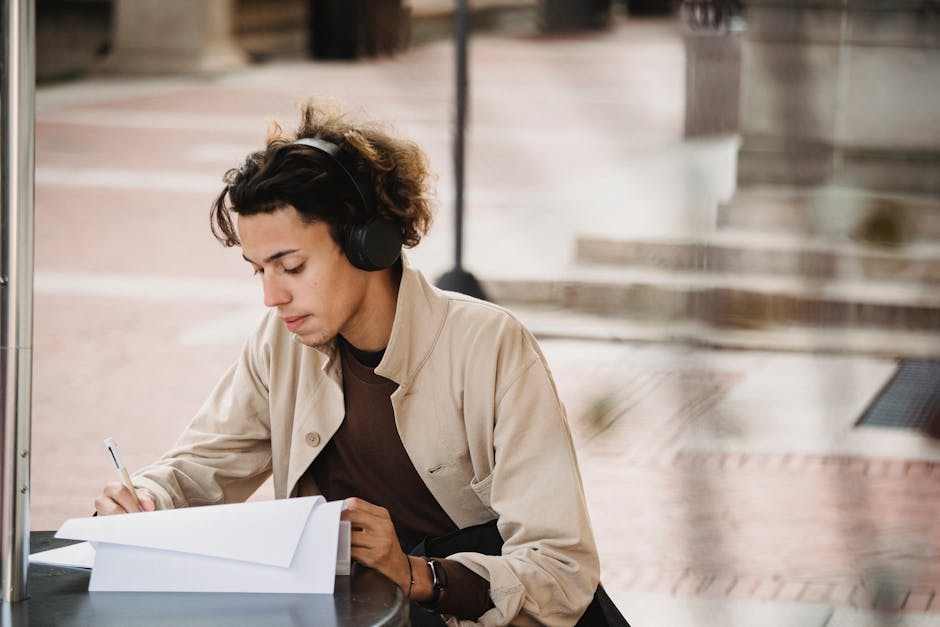
You sit down. The proctor hands out the paper. Your heart starts pounding before you've even read question one. Your hands feel clammy. Suddenly, every fact you spent three weeks memorizing has evaporated, and the only thing your brain can produce is a low-grade hum of panic.
If that scene sounds familiar, you're not broken — you're experiencing test anxiety, and roughly 25 to 40 percent of students deal with it at a level that measurably hurts their scores. The good news: anxiety in the moment isn't a personality flaw or a sign you didn't study enough. It's a physiological response, which means it can be interrupted, retrained, and in most cases reduced sharply with techniques that take a few weeks of practice — sometimes a few minutes.
This guide walks through nine evidence-based methods drawn from cognitive psychology, sports performance research, and clinical anxiety treatment. None of them require medication, a therapist, or a $200 study app. They do require you to practice before exam day, not the night of.
What test anxiety actually is (and isn't)
Test anxiety is your sympathetic nervous system mistaking an exam for a physical threat. Cortisol rises, your heart rate climbs, blood diverts away from the prefrontal cortex — the part of your brain that handles working memory, reasoning, and recalling answers. That's the cruel irony: the exact equipment you need to perform is the equipment anxiety partially shuts down.
There are two flavors. Cognitive anxiety* is the racing thoughts: "I'm going to fail," "everyone else is finished," "my parents will be furious." *Somatic anxiety is the body stuff: shaky hands, nausea, shallow breathing, that pins-and-needles feeling. Most people get a mix. The techniques below target both, because solving only one usually leaves the other free to wreck your exam.
One important distinction: a moderate dose of arousal helps performance. The Yerkes-Dodson law has been replicated for over a century — peak performance happens when you're alert and slightly activated, not when you're calm to the point of detachment. The goal isn't zero anxiety. It's keeping arousal in the productive zone instead of letting it tip into freeze mode.
1. Use 4-7-8 breathing before you walk in
Of every technique in this article, controlled breathing is the fastest acting. It directly activates your parasympathetic nervous system through the vagus nerve, which lowers heart rate within roughly 60 to 90 seconds. Studies on physiological arousal during exams show measurable cortisol drops after about five minutes of slow breathing.
The protocol: inhale through your nose for four seconds, hold for seven, exhale through your mouth for eight. Do four cycles. The long exhale is the active ingredient — it's what flips the nervous system out of fight-or-flight.
Practice it twice a day for the week before your exam, not just on exam morning. Your body learns the response, and you can summon it faster when you're under pressure. Students who train breathing as a habit get the calming effect in about a third the time of students trying it cold for the first time at the testing center.
2. Reframe the symptoms instead of fighting them
Stanford researchers have shown that students who interpret a racing heart as excitement* rather than *fear perform measurably better on the same exam. The technique is called cognitive reappraisal, and it sounds like wishful thinking until you realize the physiological signature of excitement and anxiety are nearly identical — racing heart, elevated breath rate, butterflies. Your brain's interpretation is doing most of the work.
So when your heart starts racing in the testing room, instead of thinking "I'm panicking, this is bad,"* try *"My body is getting ready to focus." Out loud is even better. Subjects in one well-cited study who said "I am excited" before a high-pressure task outperformed those who said "I am calm" — because trying to force calm fights the body's actual state, while reframing rides with it.
This is not toxic positivity. You're not telling yourself the exam doesn't matter. You're correctly labeling the physical sensations so your prefrontal cortex stops interpreting them as evidence of impending failure.
3. Brain-dump for two minutes when you sit down
Research from Sian Beilock at the University of Chicago found that students who spent ten minutes writing about their worries before a high-stakes math exam scored significantly higher than students who didn't — about a full grade higher in some conditions. The mechanism: anxiety occupies working memory. When you put it on paper, you free up cognitive bandwidth for the actual problems.
You won't get ten minutes inside the testing room, but two minutes works. As soon as you sit down with the paper, scribble in the margin: I'm worried about question types I haven't seen. My grade depends on this. My hands feel weird. Whatever's true. The point isn't the writing — it's evicting the noise from the front of your mind so the math, the dates, or the essay prompt can move in.
Then write down two or three formulas, dates, or anchor concepts you crammed last. This is called a "brain dump" or "memory dump," and it lets you stop using mental energy to keep them held in short-term memory.
4. Train under exam-like conditions, not just cozy ones
Context-dependent memory is well documented: you recall information better in a state similar to the one you encoded it in. If every study session happened in your bed with lo-fi playing and your dog at your feet, the testing room — with fluorescent lights, a hard chair, a ticking clock, and twenty other anxious humans — is a foreign environment for your memory to retrieve from.
The fix is straightforward: simulate the conditions. Do at least three full-length practice exams under timed, silent conditions. No phone, no snacks, no music, no breaks beyond what the real exam allows. Sit at a desk, not on your bed. Wear what you'd wear to the actual exam if it's a uniform.
This does two things at once. It strengthens retrieval in conditions that match the test, and it gives your nervous system practice runs. Anxiety on attempt three is usually a third of what it was on attempt one — your body is learning the situation isn't actually dangerous.
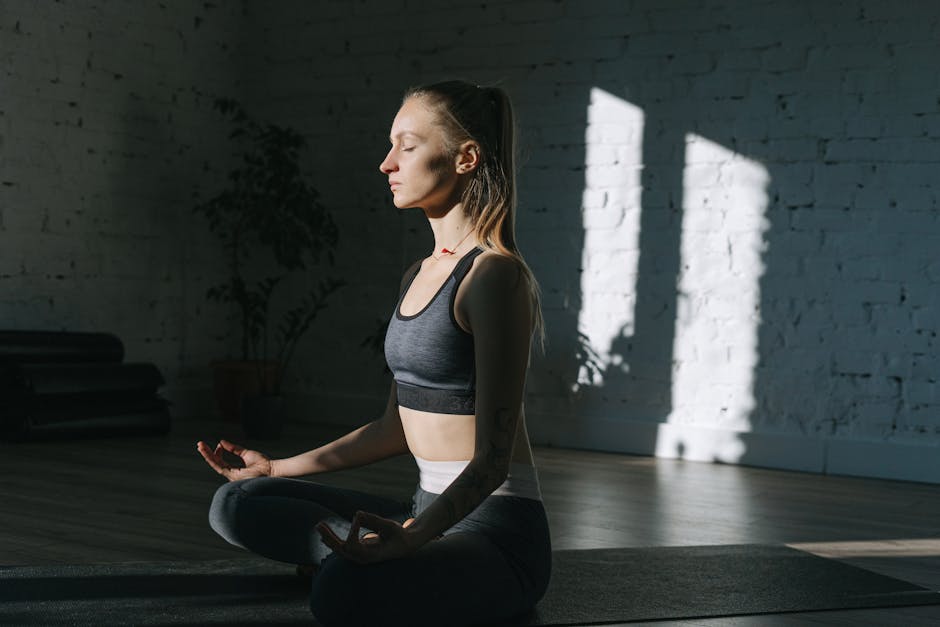
Pre-exam breathing and mindfulness practice activates the parasympathetic nervous system within 60-90 seconds.
5. Build a fixed pre-exam routine
Olympic athletes, surgeons, and chess grandmasters all use pre-performance routines for the same reason: they shrink the cognitive cost of the moments before the high-stakes event. You're not making decisions ("should I review this last chapter?") when your brain is already loaded — you're following a rehearsed sequence.
Build yours and stick to it for every practice exam:
- The night before: review notes lightly for 30 minutes max, then stop. Cramming late hurts more than it helps.
- Eight hours of sleep. This is non-negotiable for memory consolidation, and the research on it is overwhelming.
- A breakfast you've eaten before. New foods on exam day cause GI surprises.
- Arrive 20 minutes early. Late arrival floods your system with cortisol you don't need.
- Five minutes of 4-7-8 breathing in the parking lot or hallway.
- A specific phrase or thought you use to enter "test mode." Mine was always: I know more than I think I do. Pick yours.
The routine itself becomes a calming cue. After three or four uses, your body starts entering test-ready mode automatically when you begin the sequence.
6. Stop catastrophizing with the "so what?" chain
Cognitive-behavioral therapy uses a technique called decatastrophizing, which sounds clinical but is mostly just asking "so what?" until you hit the actual fear. The runaway thoughts that hijack you during exams almost never describe the real worst case — they describe vague doom. Naming the doom shrinks it.
Try this on paper a week before the exam:
> I'm worried I'll fail this test.
> So what? I'll get a bad grade in the class.
> So what? My GPA will drop.
> So what? I might not get into the program I want.
> So what? I'd have to apply somewhere else, take it again, or change paths.
Almost always, the real bottom of the chain is something you could survive and recover from. That doesn't mean failing wouldn't sting — it means your brain isn't actually facing extinction, even though the cortisol thinks it is. Doing this work in advance gives you something concrete to remind yourself of when the spiral starts during the exam.
7. Eat for stable blood sugar, not for a peak
Skipping breakfast or loading up on simple carbs before an exam is a common pattern, and both fail you in the same way: blood sugar spikes and crashes mimic anxiety symptoms. Shaky hands, racing heart, foggy thinking — your body can't tell the difference between low blood sugar and panic, so you end up convinced you're falling apart when you actually just need protein.
Aim for a meal with protein, fat, and complex carbs about 90 minutes before the exam. Eggs, oatmeal, yogurt with nuts, peanut butter on whole grain — anything that gives you steady fuel for two to three hours. Avoid: pure sugar, large coffees you don't normally drink, energy drinks, and skipping the meal entirely. Caffeine especially is a trap if you don't have a daily habit. A normal cup for a non-coffee-drinker can push a borderline-anxious system over the edge.
8. Use progressive muscle relaxation the night before
Progressive muscle relaxation sounds like a 1970s cassette tape, but it's one of the most studied techniques for somatic anxiety. The protocol: lying down, tense each muscle group for five seconds, then release for ten. Start at your feet, work up to your face. The whole sequence takes about 12 minutes.
The reason it works: chronic anxiety creates baseline muscle tension you don't notice until you contrast it with deliberate relaxation. By going through every group, you reset your body's sense of "neutral," which improves sleep quality and lowers next-morning cortisol. Doing it the night before an exam helps you fall asleep faster and reduces the "wired but tired" feeling at 2 a.m. that ruins your test day.
There are dozens of free guided versions. Pick one and use it three or four times before exam week so your body knows the routine.
9. Build self-efficacy through earned wins
The single biggest predictor of test anxiety isn't intelligence, study time, or family pressure — it's self-efficacy, your belief that you can actually succeed at the task in front of you. Students with low self-efficacy panic harder regardless of how prepared they are. Students with high self-efficacy keep working through the panic.
You build self-efficacy through small, earned wins, not pep talks. Each completed practice exam, each topic you can now teach to someone else, each timed quiz you finish without a meltdown — these stack. By exam day, you want a stack of evidence that says I have done this kind of thing before and not died.
This is where the right tools matter. Generating practice tests from your own notes — using something like QuickExam AI or any equivalent — works because every practice question you answer correctly is a tiny vote of confidence. It's a fast feedback loop. The more you practice retrieving under pressure, the more your brain learns that the test environment is survivable.
Putting it together: a four-week protocol
Most students try to fix test anxiety in the 24 hours before the exam, which is when none of these techniques have time to fully work. Here's a realistic build:
- Four weeks out: Start daily 4-7-8 breathing practice, twice a day, five minutes each. Begin practice exams under realistic conditions.
- Three weeks out: Add the brain-dump exercise to every practice exam. Start the "so what?" chain on paper if catastrophic thoughts appear.
- Two weeks out: Lock in your pre-exam routine. Test it on a practice exam.
- One week out: Add progressive muscle relaxation before sleep. Light review only — no cramming. Eight hours of sleep is the priority.
- Day of: Routine, breathing, brain dump, reframe symptoms as excitement. Trust the work.
Test anxiety isn't a character flaw or a sign you don't belong in the class. It's a misfiring threat response that responds well to deliberate practice — the same kind of practice you've already been doing for the content itself. Treat your nervous system like a study subject, give it a few weeks of training, and walk into the next exam with both your knowledge and your physiology on your side.
Ready to Create Better Exams?
Join thousands of educators using QuickExam AI to save time and create engaging assessments.