The Memory Palace Technique: How to Memorize Anything for Exams Using a 2,000-Year-Old Method
You can memorize a 50-item list of cranial nerves, the kings of England in order, or the entire Krebs cycle without flashcards. The trick is older than the printing press. Roman senators used it to give two-hour speeches without notes. Greek poets used it to recite epics. Today, it is what every world memory champion relies on to memorize a shuffled deck of cards in under 20 seconds.
It is called the Memory Palace, or the Method of Loci, and the cognitive science behind it is well-documented. Yet most students never learn it. They keep re-reading textbooks and highlighting paragraphs and wondering why nothing sticks.
This article walks through what the Memory Palace is, why it works on a brain level, and exactly how to build one for your next exam — with a real example you can copy.
What Is a Memory Palace? (And Why Roman Senators Used One)
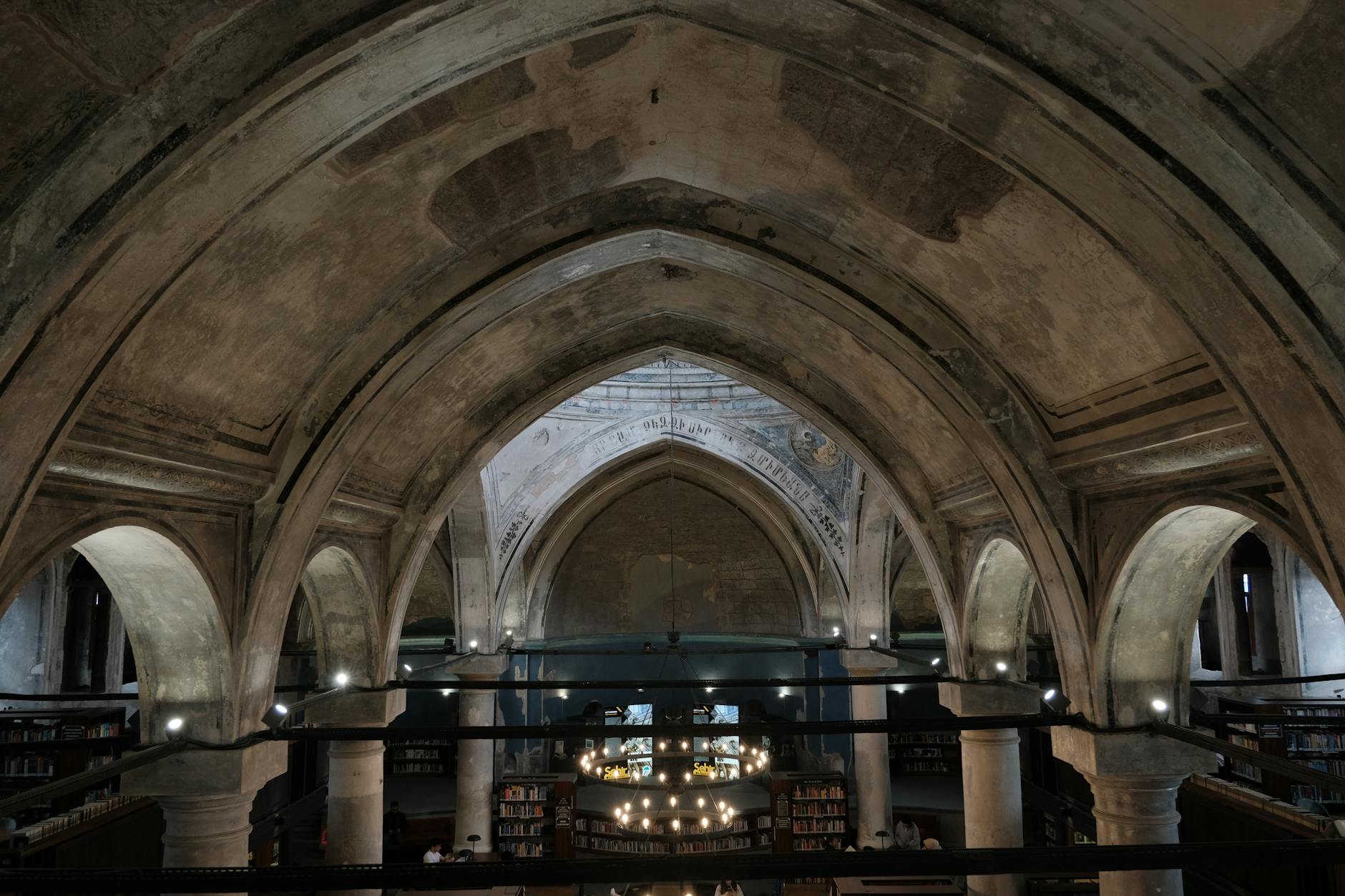
A Memory Palace is a place you know well — your childhood home, your dorm, the route from your bedroom to the kitchen — that you mentally walk through to recall information. Each item you need to memorize gets attached to a specific spot along the route. To remember the list, you take the walk in your head and pick up each item as you pass it.
The technique traces back to roughly 477 BC. The Greek poet Simonides of Ceos was at a banquet when the roof collapsed and crushed every guest beyond recognition. Simonides was the only survivor. To help families identify their dead, he closed his eyes and recalled exactly where each guest had been seated. That moment — connecting people to places — is the origin story of the method.
Roman orators like Cicero refined it into a teaching system. They would imagine the rooms of a real building and place each part of a speech in a different room. To deliver the speech, they would mentally walk through the building.
Two thousand years later, the technique has not changed much. Only the science explaining why it works has gotten sharper.
The Science: Why Spatial Memory Beats Flat Memorization
Your brain did not evolve to memorize lists of vocabulary words. It evolved to remember locations — where the water source is, where the predator was last seen, which berries made you sick. Spatial memory is one of the oldest, most reliable systems in the human mind. It is handled mostly by the hippocampus, and it works on a different track than the rote verbal memory you use for flashcards.
A 2017 study published in Neuron by Martin Dresden and colleagues scanned the brains of memory athletes and found that their brains were not structurally different from regular people. What was different was the connectivity between regions. After just six weeks of Memory Palace training, ordinary participants showed similar connectivity patterns and could memorize 62 words in order — up from 26 before training.
Three things drive the effect:
- Spatial encoding. Anchoring information to a place pulls it into the hippocampus, which is built for location-based recall.
- Visual imagery. Images are remembered roughly twice as well as words alone, an effect cognitive scientists call the picture superiority effect.
- Story and emotion. Adding weird, absurd, or emotionally charged scenes makes a memory stick because the amygdala flags it as worth saving.
When you combine all three — a familiar place, vivid images, and a strange story — you are using almost every memory system your brain has at the same time.
How to Build Your First Memory Palace (Step by Step)
You do not need a real palace. You need any place you know in detail. Here is how to set one up in about 30 minutes.
Step 1 — Pick a place you know cold
Your house, your apartment, the route to school, your grandmother's kitchen. The rule is simple: you should be able to walk through it in your mind without thinking. If you have to pause and ask yourself "wait, what comes after the hallway," pick a different place.
Step 2 — Define a fixed route
Walk through it once, mentally, in a fixed order. Always start at the same spot and always go in the same direction. Front door, then living room, then kitchen, then hallway, then bedroom — same path every time. The route is your skeleton. Without a fixed route, your mental walk falls apart on test day.
Step 3 — Mark 10 to 20 specific stations along the route
These are called loci (Latin for "places") and they are the spots where you will park information. A station should be a distinct, visualizable object — not the whole kitchen, but the fridge, then the stove, then the sink, then the cabinet under the window. Aim for 10–20 stations in your first palace. You can build more palaces later for other subjects.
Step 4 — Walk it twice with your eyes closed
Before you put any information in, practice the route empty. Close your eyes and walk through it. Front door. Coat hook. Shoe rack. Mirror. Living room couch. Coffee table. TV. The stations need to be automatic. If they are not, you will spend test time trying to remember the palace itself instead of the content.
How to Pack a Memory Palace With Exam Information
Once your palace is built, the actual encoding happens fast. The rule is: turn each piece of information into a vivid, weird, exaggerated image and place it at the next station.
Say you need to memorize the eight planets in order. Walk into your palace.
- Front door (Mercury): the door is on fire, with a tiny silver-suited Mercury thermometer running across it screaming.
- Coat hook (Venus): a giant statue of Venus is hanging by her hair from your coat hook, dripping perfume onto the floor.
- Shoe rack (Earth): a globe the size of a beach ball is stuffed into your shoe rack, leaking dirt and grass clippings.
- Mirror (Mars): the mirror is cracked and bleeding red Martian sand all over the wall.
- Living room couch (Jupiter): a massive striped Jupiter is squashing your couch, with the Great Red Spot pulsing.
You get the pattern. The weirder, the better. Bland images get forgotten. A planet politely sitting on a coat hook is forgettable. Venus dripping perfume from her hair is not.
The same approach works for almost any list-style content: anatomy structures, historical dates, vocabulary in a foreign language, the steps of a chemical reaction, formulas, legal cases. The technique cares less about the subject and more about whether you can turn the content into something visual.
A Real Example: Memorizing the 12 Cranial Nerves
Medical students have used Memory Palaces for centuries to drill anatomy. Here is one way to memorize the 12 cranial nerves in order using the route from your front door to your bed.
- Olfactory — your front door smells overwhelmingly of pizza.
- Optic — a giant eyeball is rolling down the hallway toward you.
- Oculomotor — the eyeball spins on a remote-controlled motor on the side table.
- Trochlear — a tiny pulley (trochlea) is attached to the lampshade, lifting a smaller eyeball.
- Trigeminal — three identical Gemini twins are sitting on the couch.
- Abducens — one of the twins gets abducted by aliens through the ceiling.
- Facial — your face appears on the TV screen in a glossy commercial.
- Vestibulocochlear — a giant snail (cochlea) is balancing on a vestibule of swirling water on the kitchen counter.
- Glossopharyngeal — a glossy tongue is licking the fridge.
- Vagus — Las Vegas neon signs cover the cabinet.
- Accessory — a pile of fashion accessories is dumped in the sink.
- Hypoglossal — a hyperactive tongue is bouncing off the bedroom wall.
It sounds ridiculous. That is the point. Two days from now, walk the route in your head and you will get all twelve in order. Most students who use this method recall the full list with 90%+ accuracy after a single pass and a quick review the next morning.
Memory Palace Mistakes That Make Students Quit
Plenty of students try this once, fail, and decide it does not work for them. Almost always, it is one of these mistakes.
Bland images. If your image of "mitochondria" is just the word "mitochondria" floating in midair, it will not stick. Make it absurd. Make it move. Make something happen to it.
Loose route. If your stations move around in your head, the information will too. Lock the route down before you put anything in it.
Skipping the review. A Memory Palace is not magic — you still need to walk through it once or twice in the next 24 hours, and again before the exam. Without that, the spatial trace fades like any other memory. Pair the palace with spaced repetition and recall stays sharp for weeks.
Trying to use one palace for everything. If you cram cranial nerves, the Krebs cycle, and Spanish vocabulary into the same hallway, the images will collide and you will retrieve a confused mess. Use a different palace per subject.
When the Memory Palace Beats Other Study Methods (And When It Does Not)
The technique is not a cure-all. It shines for specific kinds of exam material:
- Ordered lists (planets, presidents, anatomical structures, historical events)
- Vocabulary and terminology
- Multi-step processes (cellular respiration, legal procedures, lab protocols)
- Dates, names, and facts that resist rote memorization
It is less useful when you need to deeply understand a concept rather than recall a list. For physics derivations, essay-style history exams, or anything where the question is "why did X happen," you are better off with active recall, the Feynman technique, or practice problems. Memorizing the steps of a derivation without understanding them will fail you the moment the exam phrases the question differently.
The strongest study system pairs both: use Memory Palaces for the rote stuff your exam will test (terms, lists, sequences) so you free up working memory to actually think about the harder analytical questions.
How to Combine the Memory Palace With Active Recall
The Palace gets information into your head. Active recall keeps it there. Here is a four-day cycle that works for most students preparing for an exam two to three weeks out.
Day 1. Build the palace and place all the items. Walk through it twice from start to end.
Day 2. Walk the palace from memory without notes. Mark which stations were fuzzy and re-encode those images more vividly.
Day 4. Walk it backward. Going backward forces real recall instead of just following the familiar forward route.
Day 7 onward. Mix the palace with practice questions. When a question asks about a fact stored in the palace, mentally jump to the station instead of trying to retrieve the word directly. This is exactly how exam-day recall is supposed to feel — fast, visual, almost effortless.
Tools like AI-generated practice tests built from your own notes are the natural pairing here. The palace stores the facts; the practice test stresses retrieval and surfaces gaps. Working both sides of the loop is what separates students who can rattle off the answer cold from students who recognize the answer when they see it but cannot produce it under pressure.
Should You Use a Memory Palace for Your Next Exam?
If your next exam has any list, sequence, or terminology you keep forgetting — yes. Spend an hour on a single palace. Test it 24 hours later. If you can walk it cleanly from memory, you have a working study system that scales to almost any subject.
The technique is not new and not magic. It is just a better fit for how human memory actually works than the way most schools teach studying. You are using a tool the orators of ancient Rome used to deliver hour-long arguments without a single note. Your anatomy quiz is well within its capability.
Pick one place you know cold. Pick one list you need to memorize. Build the palace tonight. Walk it tomorrow. The first time it works — and it will — you will understand why this technique survived 2,500 years of memory research and remained the gold standard the whole time.
Ready to Create Better Exams?
Join thousands of educators using QuickExam AI to save time and create engaging assessments.