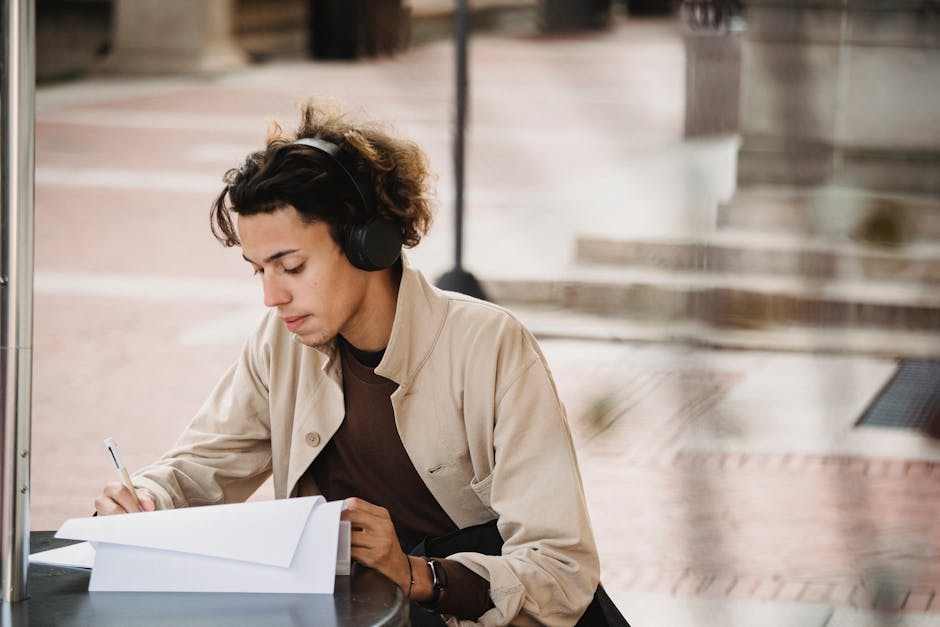
Exam Anxiety Is Wrecking Your Grades — Here's How to Actually Beat It Before Your Next Test

You've studied for weeks. You know the material — or at least you thought you did. But the moment the exam lands on your desk, something shifts. Your heart races. Your palms sweat. That formula you reviewed twenty minutes ago? Gone. Completely blank.
If this sounds familiar, you're not alone. Research from the American Test Anxiety Association suggests that between 25% and 40% of students experience significant test anxiety. And it's not just nerves — it's a measurable cognitive impairment that actively sabotages your performance.
Here's the thing most study guides won't tell you: exam anxiety isn't a character flaw. It's a predictable neurological response, and once you understand why it happens, you can systematically dismantle it.
I've spent years coaching students through high-stakes exams — from college finals to professional certifications — and the strategies below are what actually move the needle. Not generic "just relax" advice. Real, implementable tactics.
Why Your Brain Betrays You During Exams
Before we fix the problem, let's understand it.
When you perceive a threat (and yes, your brain treats a difficult exam like a threat), your amygdala triggers the fight-or-flight response. Cortisol and adrenaline flood your system. Your working memory — the cognitive workspace you need for problem-solving, recall, and critical thinking — gets hijacked.
Dr. Sian Beilock, a cognitive scientist at the University of Chicago, demonstrated this in a landmark study: students under pressure performed up to 20% worse on math problems, not because they didn't know the material, but because anxiety consumed the mental bandwidth they needed to access it.
Think of it like your brain's RAM. Anxiety is a background process eating up resources. The more anxious you are, the less processing power you have for the actual test.
So the goal isn't to eliminate nerves entirely (a little adrenaline actually helps performance). It's to keep anxiety below the threshold where it starts stealing your cognitive resources.
Strategy 1: Reframe the Anxiety Response
This one is counterintuitive, but it's backed by research from Harvard Business School.
Instead of telling yourself "calm down" (which rarely works and can actually increase anxiety), try telling yourself "I'm excited."
In a series of experiments, psychologist Alison Wood Brooks found that participants who reframed their anxiety as excitement performed significantly better on math tests, public speaking, and karaoke (yes, karaoke was part of the study).
Why does this work? Both anxiety and excitement are high-arousal states. Your body is already revved up — trying to shift to calm (a low-arousal state) is like slamming the brakes at highway speed. But redirecting that energy toward excitement? That's just changing lanes.
Before your next exam, try saying out loud: "I'm excited to show what I know." It feels ridiculous. It works anyway.
Strategy 2: The 10-Minute Brain Dump
Here's a technique that takes almost no effort but delivers outsized results.
In the first 10 minutes of your exam (or immediately before, if you can), write down everything you're worried about. Not the material — your worries. "I'm going to fail." "I don't remember chapter 7." "Everyone else looks more prepared than me."
A study by Ramirez and Beilock (2011) published in Science found that students who did an expressive writing exercise before a high-stakes exam improved their performance by nearly a full grade point compared to those who didn't.
The mechanism is elegant: by externalizing your worries onto paper, you free up working memory. Those anxious thoughts are no longer looping in the background, consuming cognitive resources. They're on paper now. Your brain can let them go.
Strategy 3: Build an Exam Simulation Practice
Most students practice the material. Very few practice the experience.
Exam anxiety is often triggered by the testing environment itself — the time pressure, the silence, the finality of it. If you only study in comfortable conditions (your bed, with music, no time limit), you're building a massive gap between your practice environment and the real thing.
The fix: simulate actual exam conditions at least 3 times before the real test.
- Set a timer matching the real exam duration
- Sit at a desk (not your bed)
- Turn off your phone completely
- Use practice questions you haven't seen before
- Don't check your notes — treat it like the real thing
This is where tools like [QuickExam AI](https://quickexamai.com) become genuinely useful. Instead of recycling the same practice questions from your textbook (which gives you a false sense of confidence), you can generate fresh, topic-specific practice exams that mirror real test formats. The AI adapts to your subject and difficulty level, which means every practice session feels like a real exam — because it essentially is one.
The goal is desensitization. The more your brain associates exam conditions with safety ("I've been here before, I survived"), the less likely it is to trigger the panic response.
Strategy 4: The 4-7-8 Breathing Technique
You've probably heard "just breathe" a thousand times. Here's the specific technique that actually works, developed by Dr. Andrew Weil based on pranayama breathing:
- Inhale* through your nose for *4 seconds
- Hold* your breath for *7 seconds
- Exhale* slowly through your mouth for *8 seconds
- Repeat 3-4 times
The extended exhale activates your parasympathetic nervous system — the "rest and digest" counterpart to fight-or-flight. It's not a metaphor; it's a physiological lever you can pull to literally slow your heart rate and reduce cortisol.
Do this right before the exam starts, and again if you feel panic rising during the test. It takes 60 seconds and nobody around you will even notice.
Strategy 5: Study in Intervals, Not Marathons
Cram sessions don't just fail to help — they actively fuel anxiety.
When you try to absorb everything the night before, you're building associations between the material and stress. Your brain encodes not just the information, but the emotional state you were in while learning it. So when you try to recall that information during the exam, the stress comes flooding back with it.
Instead, use spaced repetition — studying the material across multiple sessions over days or weeks. Each session should be 25-50 minutes, followed by a 5-10 minute break (the [Pomodoro Technique](/feynman-technique-teach-what-you-learn-study-hack) works well here).
The science is clear: spaced practice produces [stronger, more durable memories](/practice-tests-beat-rereading-active-recall-study-method) and lower anxiety at test time. You're essentially telling your brain "this material is important enough to revisit multiple times" — which triggers deeper encoding without the panic of last-minute cramming.
Strategy 6: Arrive Early and Own the Space
This sounds trivial. It's not.
Arrivals who rush into the exam room at the last second carry that frantic energy into the test. Students who arrive 15-20 minutes early can:
- Choose their preferred seat
- Settle into the environment
- Do their breathing exercises
- Review a one-page summary sheet (then put it away)
- Watch other students file in and realize everyone looks nervous
That last point matters more than you'd think. Anxiety thrives on the illusion that everyone else is calm and prepared while you're the only one struggling. Getting there early and observing the room helps normalize your feelings.
Strategy 7: Use Progressive Muscle Relaxation
Your body and mind are connected in ways that work both directions. Just as mental anxiety creates physical tension, releasing physical tension can reduce mental anxiety.
Here's a quick version you can do in your exam seat:
- Starting with your toes, tense each muscle group* for 5 seconds, then *release for 10 seconds
- Move upward: feet → calves → thighs → stomach → hands → arms → shoulders → face
- The whole sequence takes about 3 minutes
After one round, most people report a noticeable drop in tension. It works because deliberate muscle relaxation is incompatible with the tension response that accompanies anxiety — your nervous system can't maintain both states simultaneously.
Strategy 8: Change Your Relationship With Failure
This is the deep work. It's also the most important.
Much of exam anxiety stems from catastrophic thinking: "If I fail this test, I fail the course. If I fail the course, I won't graduate. If I don't graduate..." The spiral continues until a single exam feels like it determines your entire future.
Reality check: it almost never does.
Try this exercise a few days before your exam:
Write down your worst-case scenario. Actually write it out. Then ask yourself:
- Has this worst case actually happened to me before? (Usually no.)
- If it did happen, what would I actually do? (You'd retake, appeal, adjust — life continues.)
- Is there evidence that this particular exam will determine my entire career? (Almost certainly not.)
Cognitive behavioral research consistently shows that writing down catastrophic thoughts and examining their evidence reduces their emotional power. The fears feel enormous when they're vague and floating in your mind. On paper, they shrink to actual size.
Strategy 9: Build a Pre-Exam Routine
Elite athletes don't wing their warm-ups. They follow precise routines before every competition — not because they're superstitious, but because routines create predictability, and predictability reduces anxiety.
Build your own pre-exam ritual. It might include:
- The night before: Review your one-page summary, set two alarms, lay out your materials
- Morning of: Eat a high-protein breakfast, light exercise or a 15-minute walk, avoid caffeine if you're anxiety-prone
- 30 minutes before: Arrive at the building, do 4-7-8 breathing, review your calming notes
- At your seat: Brain dump exercise, quick progressive muscle relaxation, start with the easiest questions first
After doing this routine for 2-3 exams, your brain starts associating these steps with "I've got this." The routine itself becomes a signal of competence and control.
Putting It All Together: Your Anti-Anxiety Exam Plan
Let's be honest — reading strategies is easy. Actually using them requires a plan.
Here's what I'd suggest if you've got an exam coming up in the next 1-3 weeks:
This week: Start spaced study sessions. Set up 3 practice exam simulations ([QuickExam AI](https://quickexamai.com) can generate these in minutes — just upload your notes or select your subject). Do the catastrophic thinking exercise once.
Days before the exam: Build your pre-exam routine. Practice 4-7-8 breathing daily (it gets more effective with practice). Do at least one full-length practice simulation under real conditions.
Exam day: Follow your routine. Brain dump when the exam starts. Reframe anxiety as excitement. If panic hits mid-test, pause for 60 seconds of breathing. Start with questions you're confident about to build momentum.
After the exam: Reflect on what worked, regardless of the grade. Each exam is practice for the next one. [Adjust your study approach](/study-multiple-exams-at-once-realistic-system-juggling-tests) based on what you learned about yourself.
The Bottom Line
Exam anxiety isn't something you're stuck with. It's not a personality trait or a sign of weakness. It's a predictable response to a stressful situation, and like any skill, managing it gets easier with practice.
The students who perform best under pressure aren't the ones who feel no anxiety — they're the ones who've learned to work with it rather than against it.
Start with one or two strategies from this list. Practice them before your next exam. Notice what changes. Then add more.
Your brain is capable of incredible things when anxiety isn't hogging all the bandwidth. Give it the space to show you what it can actually do.
Ready to Create Better Exams?
Join thousands of educators using QuickExam AI to save time and create engaging assessments.