How to Beat Exam Anxiety: 8 Science-Backed Strategies That Actually Work

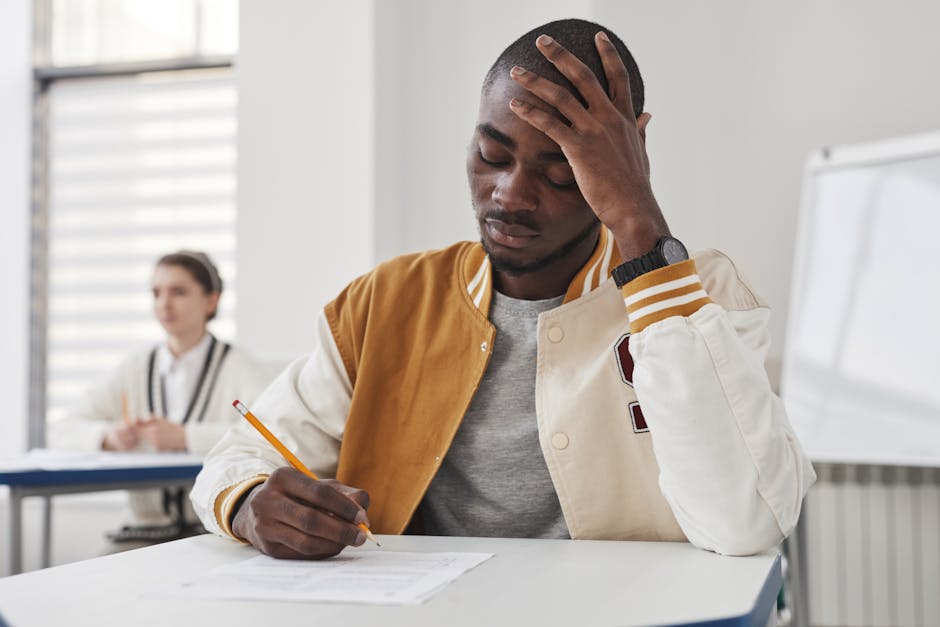
Let me tell you about the worst exam I ever took. Second year of college, organic chemistry final. I had studied for three weeks straight. I knew the material cold — could draw reaction mechanisms in my sleep, had flash cards coming out of my ears. Then I sat down, read the first question, and my mind went completely blank.
Not partially blank. Not "hmm, let me think about this" blank. I mean someone-wiped-my-hard-drive blank. My hands were shaking. My heart was pounding so hard I was genuinely worried the person next to me could hear it. I stared at that paper for 11 minutes before I could write a single word.
I passed, barely. But that experience sent me down a rabbit hole of research on exam anxiety that I have never really climbed out of. And what I found surprised me: the problem is not that anxious students know less. It is that anxiety hijacks the brain systems responsible for retrieving what they know.
Here are eight strategies that research actually supports — not the generic "just breathe" advice that makes anxious people want to scream.
1. Reframe the Anxiety (Cognitive Reappraisal)
This one sounds like nonsense until you see the data. A 2019 study published in the Journal of Experimental Psychology found that students who were told "if you feel anxious during the exam, remember that your arousal could help you perform better" scored significantly higher than those who were told to ignore their anxiety.
The trick is not to pretend you are calm. It is to reinterpret the physical symptoms. Racing heart? That is your body sending extra blood to your brain. Sweaty palms? Your nervous system is primed for peak performance. Butterflies in your stomach? That is adrenaline, the same chemical that helps athletes break records.
I tried this before a graduate school entrance exam and it felt ridiculous. I was sitting in the waiting room, heart hammering, muttering "this is excitement, this is excitement" like some kind of malfunctioning robot. But here is the thing: it worked. Not perfectly, but enough. The panic did not spiral the way it usually did.
2. The "Brain Dump" Technique
A study by Ramirez and Beilock at the University of Chicago found that spending 10 minutes writing about your worries before an exam significantly improved performance in anxious students. The theory is that expressive writing frees up working memory that anxiety would otherwise hijack.
Here is how I do it: I get to the exam room 15 minutes early. I take out a blank piece of paper (not the exam — that would be a problem). And I write down everything I am worried about. "I am worried I will forget the formulas. I am worried about question 4. I am worried I did not study enough." Just dump it all out.
It looks insane. My friend Marcus once saw me doing this and asked if I was writing my will. But the research is solid — getting those thoughts out of your head and onto paper genuinely frees up cognitive resources for the actual exam.
3. Practice Under Pressure (Stress Inoculation)
This is the one that made the biggest difference for me personally. The idea is simple: if you only ever study in a calm, comfortable environment, your brain has no practice performing under stress. When the exam creates stress, you crash.
The fix? Study under conditions that simulate exam pressure:
- Set a strict timer when doing practice problems
- Study in unfamiliar locations (not your cozy bedroom)
- Take practice tests in exam-like conditions — no notes, no phone, hard time limit
- Have someone else quiz you out loud (the social pressure mimics exam anxiety)
A 2020 meta-analysis in Educational Psychology Review found that students who regularly practiced under timed, test-like conditions showed 23% less test anxiety and scored an average of 8% higher than those who only studied passively.
I started doing timed practice exams every Saturday morning during my final year. The first few were terrible — I would finish with shaking hands and a headache. By the fourth or fifth one, the physical symptoms had noticeably decreased. My brain had learned that "timer + pressure" did not equal "danger."
4. The 4-7-8 Breathing Technique
I know I said "not just breathe" and now I am telling you to breathe. But this is specific breathing, and it has actual evidence behind it.
The 4-7-8 pattern — inhale for 4 seconds, hold for 7 seconds, exhale for 8 seconds — activates the parasympathetic nervous system. This is the biological off-switch for the fight-or-flight response that causes exam panic.
Do three cycles before looking at the exam. Total time: about one minute. The holding phase is the key — it forces CO2 buildup that triggers a physiological calming response. Regular breathing exercises do not achieve this as reliably.
I will be honest: the first time I tried this in an exam hall, I held my breath for seven seconds and made a noise that sounded like a deflating balloon. The person next to me looked alarmed. But by the third cycle, my heart rate had dropped noticeably, and I could actually read the questions without the words swimming around.
5. Strategic Preparation (Not Just More Studying)
Here is a counterintuitive finding: students with severe exam anxiety who study MORE sometimes perform WORSE. The reason? They study in ways that reinforce anxiety rather than building confidence. (Your Smartphone Is the Most Powerful Study Tool Yo)
Specifically, re-reading notes and highlighting text creates an illusion of familiarity without actual retrieval practice. You recognize the material, but you cannot recall it on demand. During the exam, when you try to pull up that information and it does not come immediately, panic sets in.
What works better:
- Active recall — close the book, try to write down everything you know, then check
- Spaced repetition — review material at increasing intervals (1 day, 3 days, 7 days, 14 days)
- Practice testing — take as many practice exams as possible, ideally with AI-generated questions that cover different angles and difficulty levels
- Teach someone else — explaining a concept forces deep processing that passive reading never achieves
The shift from passive to active studying was the single biggest change I made. It took more effort, and honestly? It felt worse in the moment. Reading notes feels comfortable and productive. Staring at a blank page trying to recall what you learned feels uncomfortable and frustrating. But that discomfort is exactly what builds the neural pathways you need during the exam.
6. Sleep — The Strategy Everyone Ignores
I am going to say something unpopular: pulling an all-nighter before an exam is one of the worst things you can do for exam anxiety.
A 2021 study in Sleep journal found that students who slept fewer than 5 hours the night before an exam reported 67% higher anxiety levels AND scored an average of 10% lower than those who slept 7+ hours. Sleep deprivation directly impairs the prefrontal cortex — the part of your brain responsible for emotional regulation and complex reasoning.
Translation: when you are sleep-deprived, your brain is literally less able to control anxiety AND less able to think through difficult questions. It is the worst possible combination.
My rule now: nothing new after 9 PM the night before an exam. If I do not know it by then, another three hours of desperate cramming is not going to save me — and the lost sleep will actively hurt me. I review key concepts lightly, then I sleep.
It took me failing one exam on 2 hours of sleep to accept this. My friend Priya, who is now a doctor, told me during medical school: "I stopped studying the night before exams in year two. My grades went up." Counterintuitive but true.
7. Arrive Early, But Not Too Early
This is a small tactical thing that makes a surprising difference. Arriving at the exam venue 15-20 minutes early gives you time to settle, do your brain dump, practice breathing, and get comfortable in the space. Arriving at the last minute means you rush in already stressed.
But — and this is important — do NOT arrive 45 minutes early and sit around absorbing everyone else's panic. Pre-exam conversations are toxic for anxious students. Someone will say "Did you study chapter 7?" and suddenly you are convinced you missed an entire chapter even though you definitely covered it.
My strategy: arrive 15 minutes early, sit alone (preferably away from other students), put in earbuds (music or nothing — just a barrier), do my brain dump, breathe, and wait.
8. Use AI Tools for Targeted Practice
This is a newer strategy that was not available even a few years ago, but it is genuinely effective. AI-powered exam generators can create practice questions from your study material — your notes, your textbook chapters, your lecture slides. This gives you unlimited practice exams tailored to exactly what you are studying.
Why this matters for anxiety: the more practice exams you take, the more your brain normalizes the experience. The format becomes familiar. The time pressure becomes routine. The types of questions stop surprising you. All of this reduces the novelty component of exam anxiety.
Tools like QuickExam AI let you upload your notes and generate practice tests in minutes. You can adjust difficulty levels, choose question types, and take the same material from multiple angles. It is essentially stress inoculation (strategy #3) made ridiculously easy.
The Bigger Picture
Exam anxiety is not a character flaw. It is not a sign that you are not smart enough or did not study hard enough. It is a physiological response that, with the right strategies, can be managed and even redirected into better performance.
Start with one or two strategies from this list. Practice them before low-stakes quizzes before you need them for high-stakes finals. Build the habits when the pressure is low so they are automatic when the pressure is high.
And if your anxiety is severe — if it is affecting your daily life, not just exam days — please talk to a counselor or mental health professional. These strategies are tools, not replacements for professional support when you need it.
What strategies have worked for your exam anxiety? Everyone responds differently — what reduces one person's stress might not work for another.
Related Articles
Ready to Create Better Exams?
Join thousands of educators using QuickExam AI to save time and create engaging assessments.