Laptop vs Handwritten Notes: What Research Actually Says About Note-Taking for Exam Prep
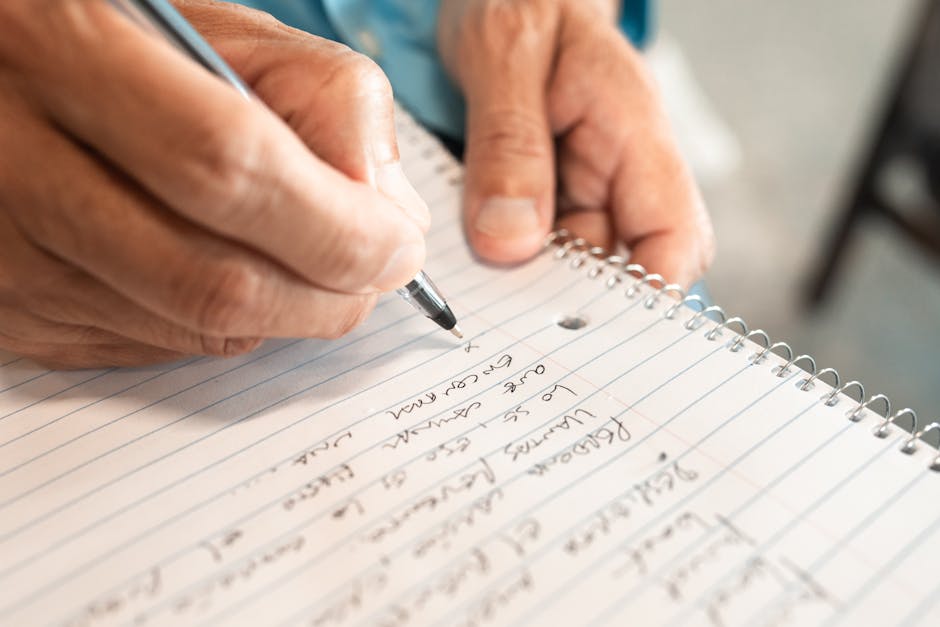
You sit in a lecture hall and look around. About half the students are typing on laptops. The other half are scribbling in spiral notebooks. Both groups think they have picked the smarter strategy. Both groups will probably argue about it on Reddit later that night.
The question of whether to take notes by hand or by keyboard is one of the most debated topics in student culture. It is also one of the few study habits where actual research has tried to settle the argument, gotten a clear answer, then watched that answer fall apart under closer inspection.
Here is what the science actually says about handwritten versus laptop notes, why the famous "pen beats keyboard" study has problems, and which method is most likely to help you ace your next exam.
The study that started the argument
In 2014, researchers Pam Mueller and Daniel Oppenheimer published a paper in Psychological Science with the catchiest title in education research: "The Pen Is Mightier Than the Keyboard." They ran three experiments where college students watched lectures and took notes either on laptops or in notebooks. Then the researchers tested them on the material.
Results looked decisive. On factual recall questions, the two groups performed about the same. But on conceptual questions, the questions that asked students to apply ideas or explain why something happened, the handwritten group scored significantly higher. The laptop group was beaten by people writing slower and capturing less material.
The explanation Mueller and Oppenheimer offered was simple. Laptop users could type fast enough to transcribe the lecture almost word for word. That meant they were not really processing what they heard. They were acting as stenographers. Handwriters, forced by slow writing speeds to be selective, had to filter and summarize in real time. That selection process is itself a form of learning. By the time their pen hit the paper, the idea had already been chewed on a little.
The study went viral. It showed up in Time, the New York Times, and just about every college orientation pamphlet for the next five years. Professors started banning laptops. Students bought fancier notebooks.
Then replication got complicated
A funny thing happened over the next decade. Other researchers tried to replicate the original finding and largely failed.
The most prominent attempt was a 2019 paper by Morehead, Dunlosky, and Rawson, who ran a much larger replication. They found no statistically significant difference between laptop and handwritten notes on either factual or conceptual exam performance. A 2021 reanalysis by researchers including a graduate student named Heather Urry came to similar conclusions: the effect, if it exists, is smaller than the original paper suggested.
This does not mean Mueller and Oppenheimer were wrong. It means the picture is murkier than headlines made it sound. The handwriting advantage seems to depend heavily on what you do with your notes afterward, how you review them, whether you are tempted to multitask on the laptop, and how dense the material is.
One thing that has held up across studies is the encoding effect. When you write by hand, your brain has to physically construct each letter. That activates motor cortex regions and creates a richer memory trace than tapping a key. A 2020 study using EEG on schoolchildren found that handwriting produced more brain activity associated with learning and memory than typing. The motor act of forming a letter appears to be doing real cognitive work.
The bigger problem with laptops
Here is where the laptop debate gets interesting. The biggest threat to laptop-based note-taking is not actually the typing. It is everything else the laptop lets you do.

A study by Sana, Weston, and Cepeda in 2013 found something striking. Students who multitasked on laptops during class, checking email or browsing social media, performed worse on the exam by about 11 percentage points. That alone is unsurprising. But here is the surprise. Students sitting near a multitasking laptop user also did worse, even when those nearby students were not multitasking themselves. Just being in visual range of someone else's screen was enough to cost them about 17 percent on the test.
Carter, Greenberg, and Walker ran a real-world experiment at the United States Military Academy at West Point in 2017. They randomly assigned classroom sections to either allow laptops and tablets or ban them. The classrooms that banned screens scored about 0.18 standard deviations higher on the final exam. That is not a small effect for an intervention as simple as putting a device away.
The takeaway is not that typing is bad. It is that laptops are connected to the internet, and the internet is engineered to capture your attention. If you can put your phone in another room and use a laptop that runs only your note app, you are testing typing versus handwriting. If you use the same laptop for notes and Twitter, you are testing handwriting versus distraction. Distraction wins that fight every time.
Where typing actually beats handwriting
Typing has real advantages that get lost in the debate. The honest answer is that it depends on what you need from your notes.
Typing wins on speed. If you are a fast typist, you can capture more material per minute than you ever could by hand. For dense technical lectures where exact wording matters, a fast typer can record more of what was said.
Typing wins on searchability. Two months later, when you need to find the lecture where your professor mentioned a specific theorem, ctrl-F finds it in three seconds. Flipping through a notebook can eat half an hour.
Typing wins on organization. Tools like Notion, Obsidian, or even plain markdown let you link concepts, tag topics, and rearrange material. Handwritten notes are linear and locked to the page they live on.
Typing wins on shareability. Group study sessions where everyone reviews the same set of notes work better when those notes are digital.
Typing wins on accessibility. If you have a hand injury, dyslexia, or any condition that makes writing slow or painful, the laptop is not a comfort choice. It is the only choice that works.
The method that beats both
Here is the part most articles skip. The research keeps finding that neither method matters as much as what you do with the notes after class. A page of handwritten genius that you never look at again is worse than a sloppy laptop transcript you review three times.
The best note-taking system across studies follows this pattern:
1. Take selective notes during class, by whichever method you can sustain attention with. If laptops tempt you to open Twitter, use paper. If your handwriting cramps after twenty minutes, use a laptop with social media blocked.
2. Process within 24 hours. Within a day of class, rewrite or restructure your notes. This is where the real learning happens. Move them into a Cornell layout, turn the main ideas into questions, or summarize each section in your own words. The act of rewriting is a form of active recall and spaced repetition combined.
3. Use the notes for retrieval practice, not re-reading. Cover your notes and try to reproduce the key points from memory. Check what you got wrong. Repeat. Re-reading notes feels productive but barely moves the needle on retention.
4. Run a weekly synthesis pass. At the end of each week, look at all your notes for that course and ask what the main themes were. What is the professor building toward? This integration step is what separates students who memorize from students who understand.
How to find your personal answer
Skip the abstract debate and run a personal experiment. Pick a class that has two roughly equivalent exams during the term. For the first exam, take handwritten notes. For the second, take laptop notes with all distractions blocked. Keep your study time constant. Compare your scores.
Most students discover something more useful than which method is better. They learn which conditions help them focus. Some find they are more attentive when handwriting because the slowness keeps them engaged. Others find that typing lets them keep up with a fast professor and reduces the stress of missing material.
For dense quantitative subjects like calculus or chemistry, handwriting almost always wins because you need to draw diagrams, work equations, and use symbols that are clumsy on a keyboard. For history, literature, or anything heavy on text and verbal reasoning, typing is often more efficient.
Common note-taking mistakes that beat the laptop versus paper debate
Whichever tool you pick, several habits will undermine your notes more than the medium choice ever could.
Verbatim transcription. Recording exactly what the professor says without filtering is the worst note-taking strategy regardless of method. Your job is to convert lecture material into your own compressed version.
Color coding everything. Spending class time choosing between five highlighter colors is not learning. It is decoration. Pick one or two colors and use them sparingly.
Skipping review. Notes you never read again are just expensive paper or pixels. Build a review schedule before the first exam, not after.
Treating notes as the only study material. Notes capture roughly 40 percent of what was said in lecture. The textbook fills the rest. If you study only your notes, you are studying a smaller half of the material.
Copying from slides. If your professor uploads the slides, your notes should not duplicate them. Your notes should be the things the slides did not say.
The bottom line
The research does not give you a clean winner. The original 2014 study suggested handwriting is better. Replications have made that finding shakier. What has held up is that multitasking on laptops is devastating to learning, that the encoding effect of handwriting produces measurable brain activity, and that what you do with your notes afterward matters more than how you took them.
Use whichever method keeps you focused during class. Process your notes within 24 hours. Test yourself on them through retrieval practice. Review them on a schedule rather than waiting until exam week.
If you do those things, you will outperform the student who agonized over the pen versus keyboard decision and then never opened their notes again. The smartest note-taking system is the one you actually use.
Ready to Create Better Exams?
Join thousands of educators using QuickExam AI to save time and create engaging assessments.