How to Prepare for Oral Exams: Strategies That Actually Work
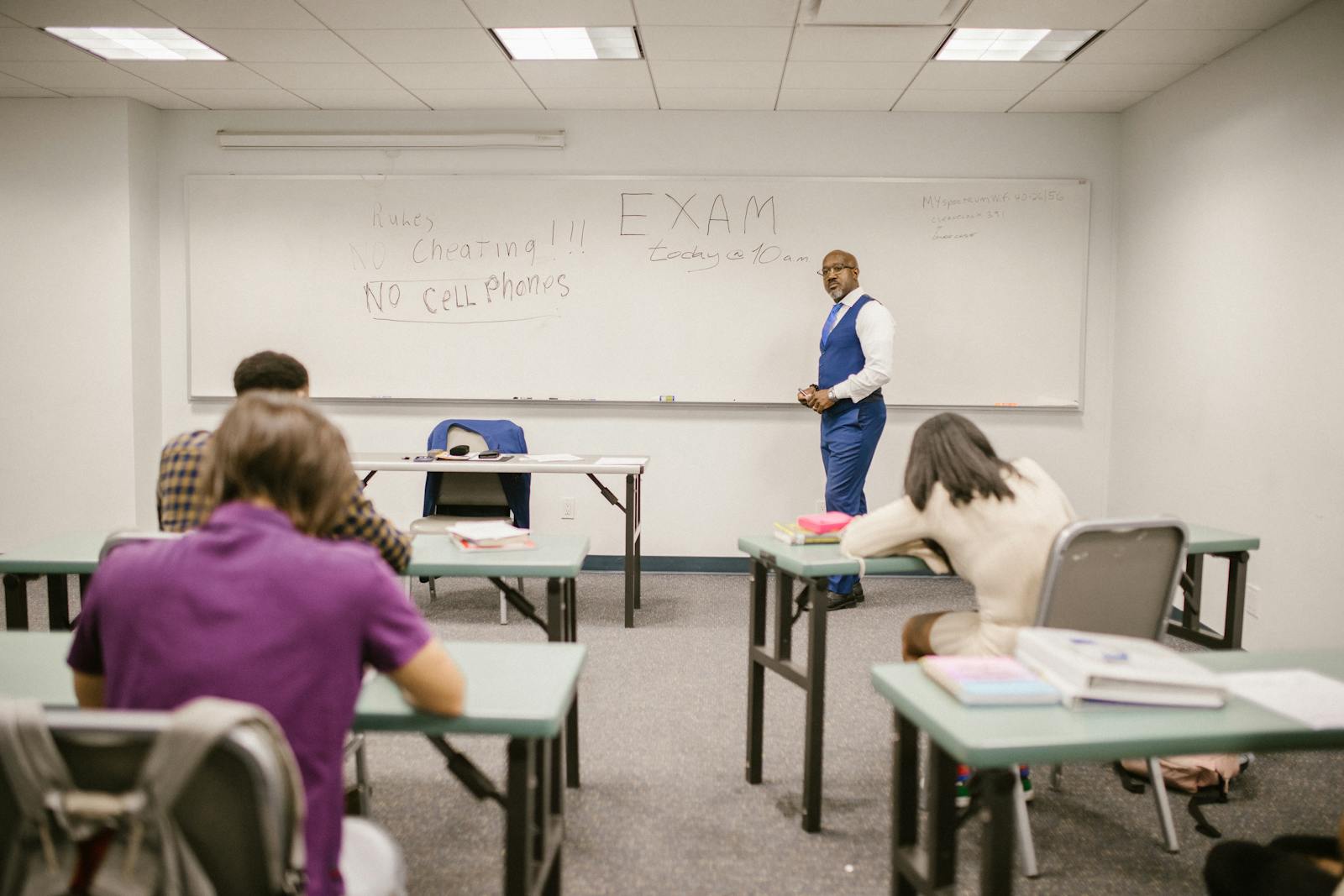
Oral exams sit in their own category of stress. A written paper gives you time to think, edit, and retreat behind your handwriting. An oral exam gives you a chair, an examiner, and a stopwatch quietly running in your head. You have to recall the material, organize it on the fly, and speak it out loud — all while someone watches your face for hesitation.
The good news: oral exams reward preparation more reliably than any other format. Examiners ask predictable categories of questions. They follow patterns you can anticipate. And the skills that protect you under pressure — structured recall, rehearsal, clear explanation — are trainable. This guide walks through what oral exams actually measure, how to prepare in the weeks before, what to do in the final 24 hours, and how to handle the moment when you blank.
What Oral Exams Actually Test
Before you plan your preparation, it helps to understand what graders look for. Oral exams are not pop quizzes with a microphone. They are designed to surface three things that written exams hide:
- Depth of understanding. When you write, you can paper over weak spots with cautious phrasing. When you speak, gaps in your mental model show up immediately. Examiners follow up on vague answers in a way written rubrics cannot.
- Ability to explain. A surprising number of students can solve a problem on paper but cannot describe their reasoning out loud. Oral exams measure whether your knowledge is the kind you can transmit to someone else.
- Composure under questioning. Most fields — medicine, law, academia, language proficiency — eventually require you to defend your thinking in real time. Oral exams are a low-stakes rehearsal for that.
This matters for preparation because each of those three skills demands a different kind of practice. Reading your notes silently builds none of them. You have to speak.
Plan Backward From the Exam Day
Most students plan study sessions forward: pick a topic, read it, move to the next one. For oral exams that approach fails because it never simulates the actual task. Work backward instead. Picture the moment you sit down in front of the examiner. What questions will they ask first? What will their follow-ups be? Write down a list of the 15-25 questions you would ask if you were the examiner. That list becomes your study plan.
For most oral exams the question categories are predictable:
- Definitional questions. "What is X?" or "Define Y in your own words." Easy to underestimate. Examiners use these to set the temperature of the exam and to check that your foundations are solid.
- Comparison questions. "How does X differ from Y?" These reveal whether you understand boundaries between concepts or whether you have memorized labels.
- Application questions. "Given this scenario, what would you do?" The examiner gives you a case and watches you reason through it. Pure memorization fails here.
- "Why" questions. "Why does this work?" or "Why did the author argue that?" These are the hardest because there is no surface-level answer.
- Edge cases. "What happens if the patient is also taking medication Z?" or "What if the contract is signed in another jurisdiction?" Edge cases test whether you can hold a model in your head and stress-test it.
Once you have your question list, score yourself honestly on each one. Rate each from 1 (would freeze) to 5 (could teach it). Spend most of your time on the 1s and 2s. This is the closest thing to a triage system that exists for oral prep.
Practice Out Loud, Every Day
This is the single most important rule in this article. Read it twice. Silent review is not preparation for an oral exam. It is preparation for a written exam that happens to be on the same topic. The skill you need — pulling structured speech out of your memory under pressure — only develops when you actually speak.
Concretely, this means:
- Set a daily 20-minute speaking session. Pick three questions from your list, set a timer for two minutes per question, and answer them out loud as if a professor were across the table. Record the audio on your phone.
- Play it back the next morning. You will cringe. That is fine. Listen for where you said "um," where you backed into a point instead of leading with it, where you went vague to buy time. Mark those moments and rerun the same question tomorrow.
- Stand up. Sitting changes your breathing and posture. If your exam will be in person, practice standing. If it will be via video, practice in front of your laptop camera.
Daily speaking practice does something silent review cannot: it forces you to translate knowledge into ordered, time-bounded language. That translation is the bottleneck during the real exam. Train it directly.
Build a Mock Examiner Network
The next step beyond solo practice is finding someone to question you. The ideal mock examiner is a classmate preparing for the same exam, but a study partner, friend, or family member will work. Hand them your question list and ask them to pick three questions at random, ask follow-ups when your answer is thin, and refuse to let you re-record.
Mock examiners give you something a recording cannot: unexpected follow-ups. The reason students freeze in real oral exams is rarely the first question. It is the second or third one — the one that probes a weak edge of your understanding. You cannot rehearse those alone. You need someone who will follow your reasoning and pull on loose threads.
If you cannot find a human partner, you can simulate one. Ask an AI tutor to play the role of an examiner on your topic, give it your question list, and tell it to ask one follow-up after every answer. This is not as good as a knowledgeable classmate, but it beats reading your notes silently.
The Power of the Structured Answer
Examiners give better grades to students who organize their answers, even when the content is roughly equivalent. This is not unfair. It is a proxy for the depth and ability-to-explain dimensions we mentioned earlier. A structured answer signals that you have a model in your head, not just a heap of facts.
Train yourself to use one of these patterns by default:
- Define, then explain, then example. Start with a one-sentence definition. Follow with the mechanism or reasoning. Close with a concrete example. This works for almost any concept-based question.
- Compare, then contrast, then judge. For comparison questions, list one or two similarities, then the key differences, then make a judgment about when each applies. This avoids the trap of listing differences randomly.
- Situation, decision, justification. For application or case questions, restate the situation in your own words, name the decision you would make, and explain why. The restatement gives you thinking time and shows you understood the prompt.
Drill these three templates until they are reflexes. Under stress your brain reaches for whatever pattern is most practiced. If that pattern is "ramble until something good comes out," you will ramble. If it is "define, explain, example," you will sound prepared even on questions you did not anticipate.
The Anti-Cramming Window: Last Three Days
Cramming for an oral exam is worse than cramming for a written one because fatigue degrades fluency much faster than it degrades recognition. A student who slept four hours can usually still pick C on a multiple-choice question. The same student will stutter, lose their place, and forget mid-sentence in front of an examiner.
Three days before the exam, switch from learning new material to consolidating what you already know. Specifically:
- Day -3: Final mock session with your toughest five questions. Identify the two weakest answers.
- Day -2: Targeted review of those two weak areas only. Then a full mock run, ideally with a partner.
- Day -1: Light review of your question list, focused on structure not content. Eight hours of sleep. No new material after lunch.
The day before an oral exam is for protecting the system that has to perform tomorrow. Reading new chapters at midnight does not add knowledge. It subtracts sleep, which subtracts the very thing oral exams measure most directly: fluent recall.
The Morning Of
The morning routine for an oral exam should be deliberately boring. Eat the breakfast you normally eat. Drink the amount of coffee you normally drink. Do not try the energy gel a friend recommended. Novelty in any input on exam day is a risk you do not need to take.
Twenty to thirty minutes before the exam, do a verbal warm-up. Pick two easy questions from your list and answer them out loud — in the car, in a bathroom mirror, in a quiet corner. Speaking aloud activates the motor planning and breath control that you will need in the room. Going in cold is a common mistake. You would not expect to play a tennis match without hitting a few balls first.
Bring water if allowed. A sip between questions is a legal, useful pause that lets your brain catch up. Examiners do not interpret it as stalling.
How to Handle the Blank
You will blank at some point. Even well-prepared students do. What separates good outcomes from bad ones is what you do in the next ten seconds.
First, do not apologize. "I'm so sorry, my mind just went blank" eats time and signals panic. Examiners are not impressed by composure theatrics, but they do notice when students lose the room.
Second, buy thinking time with a structured pause. Phrases like "Let me think about that for a second" or "Let me make sure I frame this correctly" are acceptable and far better than silence. Then take a breath and reach for the structure templates you practiced. Even if you cannot remember the content, you can usually start with "There are a few ways to think about this. The most important is…" and let your training pull a real answer out.
Third, if you genuinely do not know, say so cleanly. "I am not certain about that specific point, but here is what I do know that is related…" is a respectable answer. It signals self-awareness, which examiners value more than fake confidence.
Special Cases: Viva, Language Oral, and Defense
The strategies above apply to most oral assessments, but a few formats deserve specific notes.
Viva voce (dissertation defense). The questions will focus on the choices you made — methodology, sample size, what you would do differently. Reread your own work the week before with a critical eye and prepare a one-line defense for every major decision. Examiners want to know you understand the limitations of your own argument.
Language proficiency oral. Fluency beats grammatical perfection. Examiners are more forgiving of small errors than of long silences. Practice talking around words you do not know — "the place where you keep books" beats stopping to retrieve "library." Watch news clips in the target language daily for the two weeks before the exam to keep your ear sharp.
Clinical or case-based oral. Common in medicine, law, and engineering programs. Practice with cases from old exams, not textbook examples. Real cases have noise and ambiguity that textbooks edit out. The skill being tested is whether you can reason through messy inputs, not whether you remember the clean version.
What to Do After
The exam ends. You will replay it for hours, often catching better answers you wish you had given. This is normal and not very useful. Write down two or three questions you struggled with, file them away for the next time, and stop. Self-flagellation does not improve your grade. It only makes you dread the next oral exam.
If you have a result and feedback later, use it. Patterns in feedback ("you tend to jump to conclusions before defining terms" or "your structure is good but your examples are thin") are gold for the next round. Treat them as features of your speaking style to fix, not as personal verdicts.
Putting It Together
Oral exams reward a specific kind of preparation that students rarely do by default: speaking out loud, every day, in structured ways, on questions you would not naturally choose. It is uncomfortable. Hearing yourself fumble is unpleasant. But every painful rehearsal session is a deposit against the moment the real examiner is watching.
If you remember only one thing from this article, make it this: silent review is for written exams. Oral exams need spoken practice. Start tomorrow morning. Set a timer for ten minutes. Pick one question from your list. Answer it out loud as if someone were in the room. Then play back the recording. That single habit, repeated daily, will do more for your performance than any volume of highlighting and rereading.
The exam day version of you will thank the today version of you for putting in the awkward repetitions when no one was watching.
Ready to Create Better Exams?
Join thousands of educators using QuickExam AI to save time and create engaging assessments.